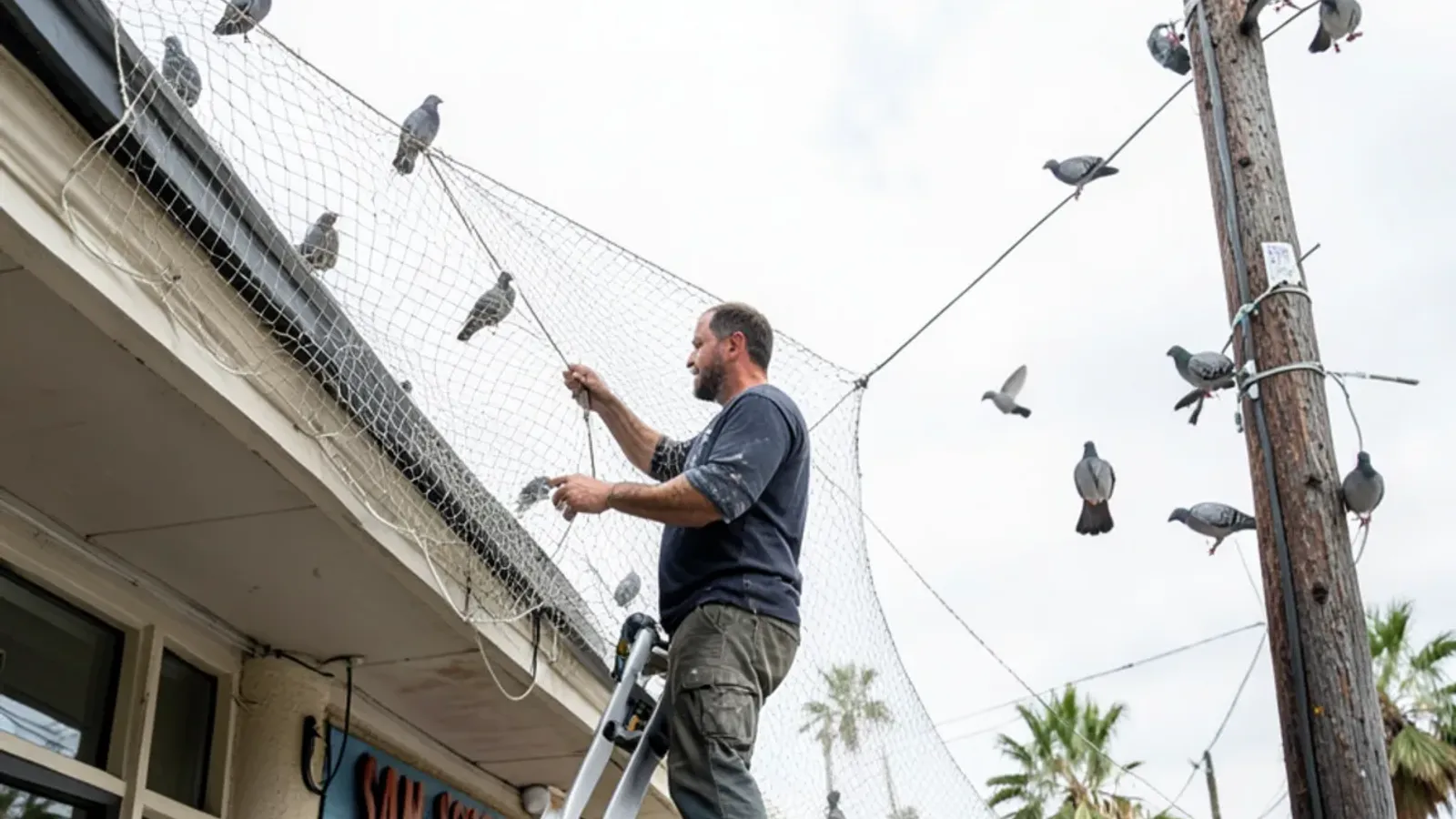
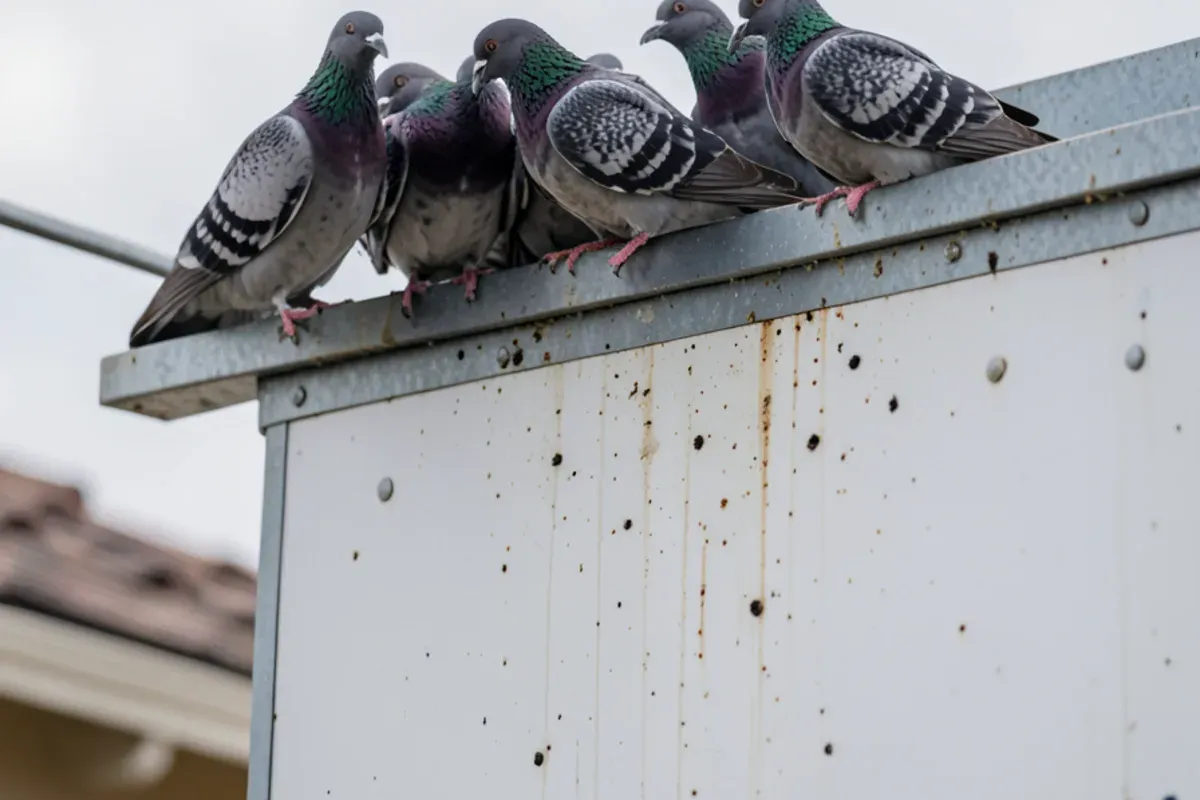
Bird control in San Jose keeps pigeons and other nuisance birds off the ledges, signs, docks and rooflines they roost on, using exclusion and deterrents rather than hoping they move on. Budget Pest Control assesses the roosting sites and installs netting, spikes or other deterrents matched to the structure, because bird droppings damage surfaces and create a health and slip hazard.
What a bird control job includes
- Assessment of roosting and nesting sites
- Netting to close off ledges, alcoves and covered areas
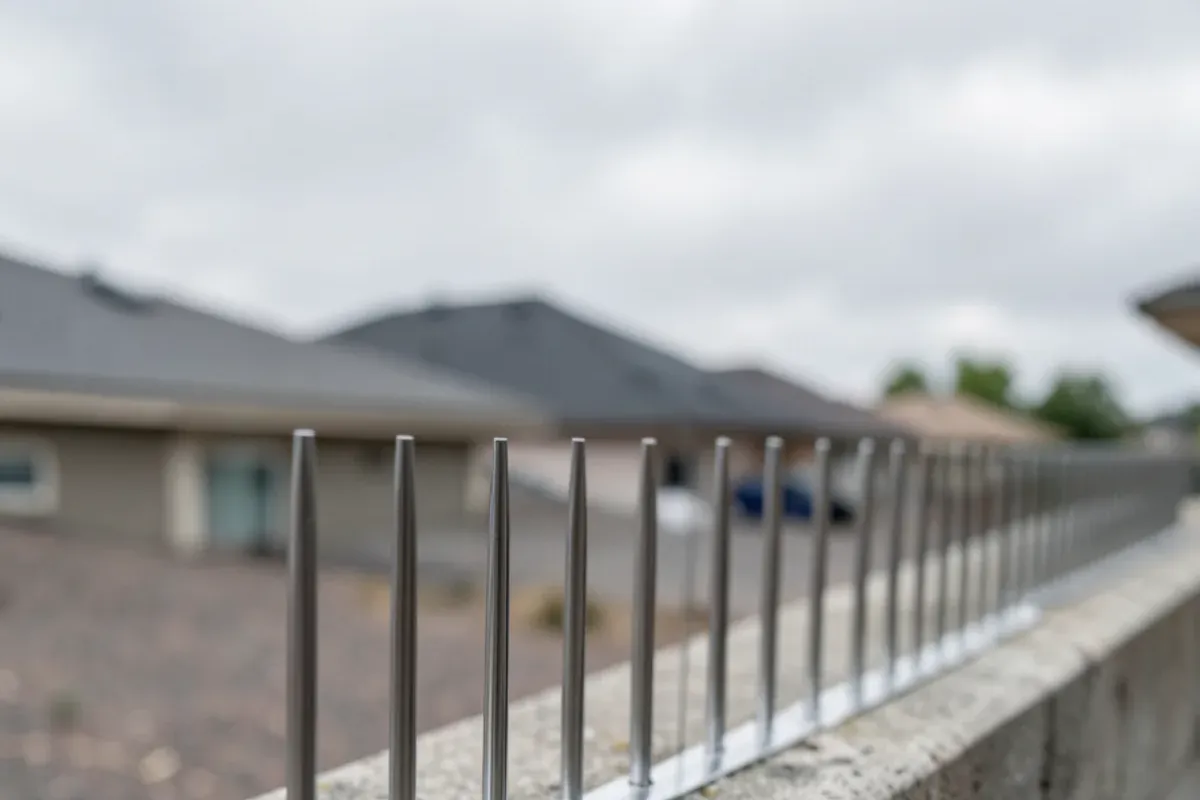
- Spikes and deterrents for signs, ledges and beams
- Guidance on cleanup of droppings and nesting debris
- Solutions for commercial fronts, docks and rooflines
How we handle it, step by step
- Assess. We identify where birds are roosting and nesting — ledges, signs, beams, docks, rooflines — and how they are getting in.
- Exclude. We install netting to close off alcoves and covered areas where birds shelter and nest.
- Deter. We fit spikes and other deterrents on ledges, signs and beams so birds cannot land and roost.
- Advise on cleanup. We guide safe cleanup of droppings and nesting debris, which carry a health and slip hazard.
Talk to a licensed pro
Call for a free estimate — we inspect, explain the finding and quote in writing before any treatment.
- Licensed — SPCB #5209
- 4.8★ on Google (20)
- Serving since 2007
- Free Estimates
What affects the price
- Size and height of the roosting areas
- Netting versus spikes and the complexity of the structure
- Cleanup scope
Why choose Budget Pest Control for bird control
- Exclusion and deterrents matched to the structure
- We address the roosting site, not just chase birds off
- Licensed SPCB operator (#11136) — verify at pestboard.ca.gov
- Commercial-focused solutions
Bird Control in San Jose & the South Bay
Pigeons roost on San Jose’s commercial storefronts, signs, parking structures and warehouse docks, and their droppings damage surfaces, foul inventory and create a slip and health hazard. Deterrents and netting fitted to the ledges and beams are what actually move them along.
Signs a property needs commercial bird control
Pigeons and other nuisance birds commit to a building once they find a safe ledge, and the longer they roost the harder they are to move — droppings build up, nests block drains, and the mess becomes a health and slip hazard. The fix is denying the roost, not chasing birds off. A few signs tell a property manager the building has a roosting problem that exclusion and deterrents need to address.
- Droppings accumulating under ledges, signs, beams or the entrance
- Birds roosting on rafters, parapets, parking-structure ledges or docks
- Nests in alcoves, signage, HVAC units or covered walkways
- Feathers and debris fouling inventory, walkways or merchandise
- Clogged roof drains or gutters packed with nesting material
- Slip hazards and odor complaints at storefronts or entrances
What bird control costs in San Jose
Bird work is priced by the size and height of the roosting areas, the method the structure calls for, and the cleanup scope. Netting a large covered area or a parking structure is a bigger install than fitting spikes along a sign or a run of ledge, and height and access drive the labor. Cleanup of accumulated droppings and nesting debris — which has to be handled safely, not dry-swept — is quoted alongside. We assess the roosting sites and match the solution to the structure rather than quoting a single product, because the wrong deterrent just moves birds a few feet. Droppings left to build up can corrode metal and concrete, so the cleanup line in the quote is also protecting the surfaces the birds have been fouling.
The structural angle behind lasting bird control
Bird exclusion is a structural pest control service under the Structural Pest Control Board, carried out here by licensed SPCB operator #11136 — verify at pestboard.ca.gov. Protected native species carry their own legal constraints on nest removal, and pigeons, starlings and house sparrows — the common commercial culprits — are generally the ones addressed with exclusion. The licensing and the structural know-how matter because netting and spikes have to be fitted to the architecture to last; a deterrent installed wrong fails within a season and the birds return. We also return to check that netting stays taut and spikes stay seated after the first season, since a sagging panel or a gap at a seam is all a determined pigeon needs to move back in.